
“Vehicle Green Sewa” refers to a service under the portal Vahan Green Sewa, managed by the Ministry of Road Transport and Highways (MoRTH), Government of India.
This service is meant to handle retrofitting (converting) older petrol or diesel vehicles to more eco-friendly fuels for example, converting them to use CNG, LPG or electric/hybrid kits. Retrofitting under Vahan Green Sewa involves installing certified kits (from approved manufacturers) and then registering this fitment in the official transport records.
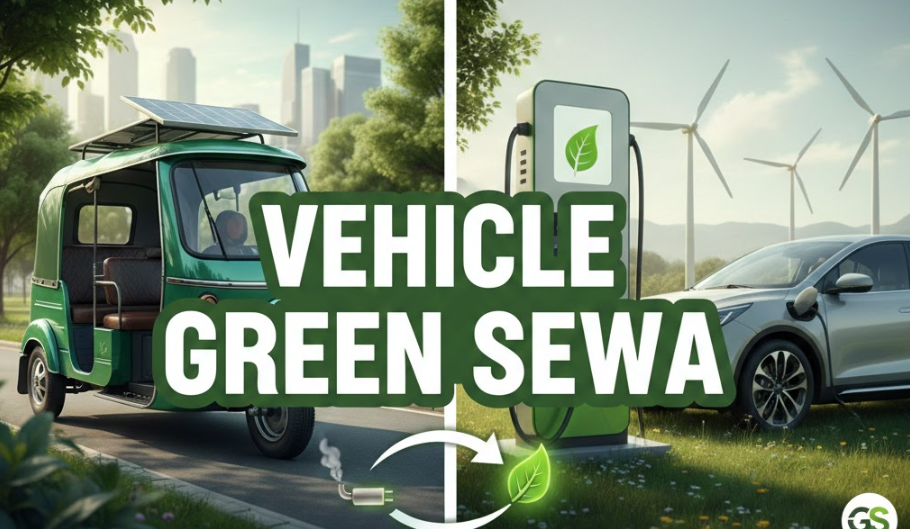
The goal: reduce pollution from older vehicles, extend the useful life of vehicles in a greener way, and encourage sustainable mobility across India.
Parivahan Quick Actions (Official Links)
Use official government portals and apps for driving licence and vehicle related services.
This is an informational website. All buttons redirect to official government platforms.Why Vehicle Green Sewa Matters: Pollution and Environmental Impact
Older petrol and diesel vehicles often emit high levels of pollutants particulates, carbon monoxide, NOx, and other harmful gases. Over time, as vehicles age, emissions tend to worsen.
Using such old, polluting vehicles increases air pollution, leading to health problems, environmental degradation, and poor air quality especially in cities and urban areas.
By using Vehicle Green Sewa and converting to cleaner fuels or retrofitting to electric/hybrid, emissions drop significantly. This helps curb air pollution, protect public health, and contribute to cleaner air.
Besides immediate emissions reductions, such conversions also support broader environmental goals: reducing carbon footprint, limiting fossil-fuel dependence, and encouraging more sustainable transportation.
Because India has many older vehicles still in use private cars, taxis, autos, small trucks, etc. — a program like Green Sewa has big importance nationwide. Retrofitting rather than scrapping gives sustainability without wasting resources.
Who can Use Green Sewa Which Vehicles Are Eligible
Vehicle Green Sewa is designed for petrol or diesel vehicles that are already registered and in use, but want to convert to cleaner-fuel kits (CNG, LPG, electric/hybrid). Eligible vehicles typically include private cars, commercial vehicles (like taxis, small goods carriers), autos/three-wheelers, or other light vehicles depending on the fitment kit and regulatory approvals.
However, only vehicles whose retrofitting kits are certified by recognised testing agencies (for example certain agencies approved by the government) are allowed for Green Sewa conversion. Thus, simply owning an older vehicle does not guarantee eligibility. The kit and the installing company must be certified/approved under the process defined by Green Sewa for retrofit/fitment.
Vehicles originally running on CNG, LPG, or already electric/hybrid may not need conversion; the main focus is on petrol/diesel vehicles seeking cleaner alternatives.
How the Process Works: From Retrofit to Registration
The process under Green Sewa involves several steps. Here is a typical flow:
- A certified retrofit company (with approved kits) applies to get empanelled on the Vahan Green Sewa portal.
- Once empanelled, the company installs the retrofit kit (e.g. CNG, LPG or hybrid/electric kit) in the vehicle. The installation must follow approved standards (including guidelines such as those from agencies like ICAT or other government-recognised testing labs).
- After installation, a fitment receipt or certificate is issued. This receipt contains vehicle details (registration number, chassis/engine number), kit serial numbers, compliance certificate number, etc.
- The receipt is submitted to the registering authority (RTO) for endorsement. Once endorsed, the vehicle registration record is updated to reflect the retrofit/converted fuel type.
- The vehicle is now officially recognized as converted under Green Sewa; this enables lawful operation using the new fuel or kit.
This full lifecycle from retrofit to registration ensures that conversions meet safety and compliance norms and vehicles remain legal for road use.
Vehicle Green Sewa Relationship with Parivahan Sewa Portal and Other Government Systems
Parivahan Sewa Portal is the main online gateway used by transport authorities across India for vehicle- and license-related services.
The backend software supporting Parivahan services is a combination of VAHAN (for vehicle registration/data) and SARATHI (for driving licence services).
Green Sewa functions as one of the services available under Parivahan meaning after retrofit, the converted vehicle’s information is updated in the national/state registers.
This integration ensures transparency, central tracking of retrofitted vehicles, and easy access for authorities reducing paperwork and improving governance across all states.
Because over 1,100 RTOs across India use VAHAN/SARATHI Green Sewa thus has nationwide reach.
For citizens, this means simplified procedures: after retrofit you do not need multiple visits; the official records reflect the new fuel type or retrofit status under the same registration number.
Regulatory and Safety Standards for Retrofit Kits and Companies Of Vehicle Green Sewa
Retrofit kits (CNG, LPG, hybrid/electric) must be certified by authorised testing agencies recognized by the government. This is crucial to ensure safety, emissions compliance, reliability, and roadworthiness.
Companies applying to provide retrofit services must register themselves on Vahan Green Sewa portal and supply necessary documents kit certification, company registration, compliance certificates, etc.
Governments use standards like those from ICAT or similar agencies for homologation (approval), and only then the kit installations are considered legitimate.
This ensures that converted vehicles remain safe for drivers and passengers, do not pose additional pollution risks, and meet emission norms. It also protects vehicle owners from legal and safety issues stemming from poorly done retrofits.
Also, retrofitting helps avoid unregulated, unsafe modifications by unscrupulous workshops because only certified and approved retrofits are permitted under Green Sewa.
Benefits of Using Green Sewa For Owners and Society Of Vehicle Green Sewa
Using Green Sewa has several advantages:
- Lower Emissions: Converting petrol/diesel vehicles to CNG, LPG, or electric kits reduces exhaust emissions good for air quality and public health.
- Extended Life of Vehicle: Instead of scrapping older vehicles, retrofit allows continued use in cleaner form, economizing resources and reducing waste.
- Cost Savings (Long Term): While retrofit may require upfront cost, operating fuel (like CNG) often costs less than petrol/diesel over many kilometers potentially saving money for owners.
- Regulatory Compliance: Official endorsement via Vahan Green Sewa makes the conversion legal, helping avoid fines or penalties for using older polluting vehicles.
- Environmental Responsibility: Contributes to national efforts to reduce pollution, greenhouse gas emissions and supports sustainable transport goals.
- Convenience and Transparency: Through integration with Parivahan Portal, owners get updated registration records reducing bureaucracy, paperwork, and ensuring records are official.
These benefits make Green Sewa a win-win for individual owners and society at large.
Challenges, Limitations and What Owners Should Know
Despite the benefits, there are some challenges and limitations to be aware of:
- Not all vehicles may be eligible: only petrol/diesel vehicles with certified retrofit kits can convert. Certified kits and retrofit companies may not be available everywhere.
- Upfront cost: Retrofit installation may involve significant initial expense which some owners may find high.
- Regional variation: Rules, availability, and approval for kits may differ by state what works in one state may not be available or approved in another.
- Paperwork and compliance: Retrofit must be done by approved company; then records must be updated via official portal; failure to comply properly may cause issues (legal or technical).
- Not instant solution: After retrofit, the vehicle must be registered again under the new fuel type and clear inspection takes time and may have waiting periods.
- Limited to certain vehicle types: Heavy commercial vehicles, older buses/trucks sometimes retrofit may not be feasible.
Thus, vehicle owners must check carefully: eligibility, certified kits, retrofit centre credentials, and local RTO support before opting for Green Sewa.
How Green Tax and Green Sewa Work Together (Context of Age-Based Taxation)
In India, there is also a concept of a “Green Tax” or “Environment / Pollution Tax” for older vehicles that contribute more to pollution.
Typically:
- Commercial vehicles older than 8 years may need to pay green tax at time of fitness renewal.
- Private vehicles older than 15 years may be subject to green tax when renewing registration.
Green tax serves as a deterrent to keep old, polluting vehicles on road; or else push owners to either scrap them or retrofit them.
Green Sewa provides the retrofit option allowing compliance with environmental regulations without discarding vehicles. Owners can avoid recurring green tax or heavy penalties by converting the fuel type.
Hence, Green Tax (as penalty/tax) and Green Sewa (as retrofit service) are two parts of a larger policy aiming to reduce pollution and push for cleaner vehicles.
Future Potential and How Green Sewa Can Grow
As India moves toward stricter emission norms and pushes for cleaner transport, Green Sewa has significant potential to expand.
- With increasing awareness of environmental issues and air pollution, more vehicle owners may choose retrofit rather than simply paying green tax or discarding vehicles.
- As retrofit kit technology improves (electric, hybrid, etc.), Green Sewa can support more sustainable conversions not just CNG/LPG but full electric conversions.
- Government may expand support subsidies, incentives, easier procedures to encourage retrofit adoption.
- As more states integrate fully with Parivahan Portal and RTOs get streamlined, retrofitting and registration with Green Sewa will become simpler and faster.
- With larger adoption, the overall emission levels from the transport sector can drop significantly, contributing to national pollution reduction goals and cleaner cities.
In short: Green Sewa could play a big role in transition to eco-friendly transport at scale across India.