
When you buy a brand-new vehicle (car, bike or other motor vehicle) in India, the final permanent registration (RC) from the RTO may take some time. To allow you to lawfully drive the vehicle during this processing time, the dealer or RTO issues a Temporary Registration (also called temporary number plate / temporary registration number).
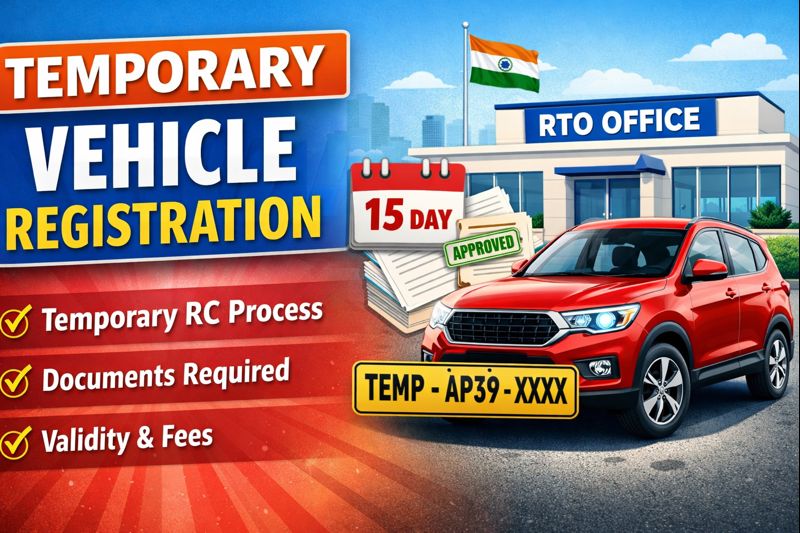
This temporary registration gives you a valid number so you can legally drive on public roads until your permanent registration arrives. It acts as a legal placeholder. The temporary number plate is usually distinct often with different colouring or a number code to mark it as temporary (for instance “red number plates” are often used).
Without this temporary registration, a brand-new vehicle cannot legally be driven until full registration is completed.
Parivahan Quick Actions (Official Links)
Use official government portals and apps for driving licence and vehicle related services.
This is an informational website. All buttons redirect to official government platforms.Vehicle Fitness Certificate Apply Online 2025, Download & Check Status
Temporary Vehicle Registration Legal Validity and Time Limit
Under the Motor Vehicles Act, 1988 and related rules, temporary registration is generally valid for a maximum of one month (≈30 days) from the date of issue.
This period gives owners a window to complete the formal permanent registration process with the relevant Regional Transport Office (RTO).
If the vehicle owner fails to get permanent registration within this 30-day period, they are supposed to apply for an extension or risk legal consequences. Some states or conditions might permit an extension or renewal, though this is subject to state-level rules.
Therefore, temporary registration is strictly a short-term measure not a long-term substitute for permanent RC.
Who Needs Temporary Vehicle Registration
Temporary registration mainly applies to:
- People who just bought a new vehicle (bike, car, van, etc.) and are waiting for permanent RC.
- Vehicles being transferred from one state to another before permanent registration is completed.
- Occasionally, in situations where paperwork is pending or RTO processing is delayed temporarily registered number allows legal movement during that period.
Dealerships usually provide temporary registration themselves at the time of purchase, so new vehicle owners don’t need to rush to the RTO immediately (though they should within the valid period).
In short: any time a vehicle does not yet have a permanent registration certificate, temporary registration is mandatory before driving the vehicle on public roads.
How to Get Temporary Vehicle Registration Process & Documents
Getting temporary registration involves a few clear steps and some required documents.
Steps:
- Fill out Form 20 (the application for new vehicle registration / temporary number plate).
- Provide a sale certificate (usually Form 21) from dealer this proves you bought the vehicle.
- Provide Road Worthiness Certificate (often Form 22), certifying that the vehicle is fit to run on road.
- Submit address proof, identity proof, and vehicle insurance certificate. Insurance is mandatory before registration.
- Pay applicable temporary registration fees (amount depends on state and vehicle type).
Once documents are verified, the RTO (or dealer, if delegated) issues a Temporary Registration Certificate (TRC) and a temporary number plate. This allows legal use until permanent RC comes.
Temporary Vehicle Registration Number Plate / Plate Color & Identification
Temporary registration plates often follow distinct formatting so law-enforcement can easily identify them. For example:
- Many temporary plates in India have yellow background with red letters (some older practices used red-text plates).
- In online classification of plates, this is signified as “temporary / red number plate” to differentiate from permanent white-background (private) or yellow-background (commercial) plates.
This visible difference helps traffic police and officials recognize vehicles that are in the temporary registration phase ensuring both compliance and easier monitoring.
What Happens After Temporary Vehicle Registration Expiry
Once the one-month (30 days) validity of temporary registration nears expiry, you have two main responsibilities:
- Apply for permanent registration at the relevant RTO. Permanent RC is mandatory under law before you continue using the vehicle.
- Replace the temporary number plate with the permanent one once issued. Continuing with expired temporary registration can be illegal.
If the owner fails to apply in time, many states impose a penalty or late fee. For instance, some reports mention a 5% late fee per month on the applicable registration charges if permanent registration is delayed beyond the allowed period.
Driving without valid registration (temporary or permanent) is illegal, and may lead to fines or legal consequences.
Why Temporary Vehicle Registration Matters Legal & Practical Importance
Having a temporary registration number is not just a convenience it is a legal requirement for new vehicles. Without it, your vehicle is not legally allowed to be driven.
- It offers a legal permit to drive, while permanent RC is being processed.
- It helps authorities track the vehicle in the transition period, ensuring compliance and responsibility.
- Insurance coverage is often tied to valid registration (temporary or permanent). Driving without valid registration may lead to insurance being invalidated.
- On sale or transfer of vehicle to another party/state, temporary registration ensures that the vehicle can be moved lawfully until full registration is done.
In short, temporary registration bridges the gap between purchase and permanent registration keeping both owner and road authorities on safe, legal grounds.
Common Mistakes / Issues with Temporary Vehicle Registration
Many new vehicle owners make mistakes or face issues here are common pitfalls and how to avoid them:
- Delay in applying for permanent RC waiting beyond 30 days can lead to fines or loss of legal validity. We saw above that some states charge late fee (e.g. 5% per month).
- Incomplete or incorrect documentation missing sale certificate, road-worthiness, insurance, address proof etc. can delay or block temporary registration itself.
- Not replacing the temporary number plate properly once permanent RC arrives continuing to use temporary plate may attract police action.
- Insurance issues if insurance was not obtained before temporary registration or if TR expires, insurance claim may be denied.
To avoid these, ensure you complete the paperwork quickly, and follow-up with RTO for permanent registration without delay.
What Happens After Permanent Registration Transition from Temporary to Permanent
Once you submit application for permanent registration, and documents are verified by RTO (chassis number, engine number, address, identity, etc.), the RTO issues a Permanent Registration Certificate (RC).
Printing and installation of permanent number plates follows the prescribed format (state code + RTO code + series + unique number).
After permanent RC is issued, temporary registration becomes invalid automatically and must be replaced immediately.
Permanent RC for private vehicles in India remains valid generally for 15 years from the date of issue. After that, the owner must apply for renewal.
Thus the process completes temporary → permanent securing lawful, long-term registration for your vehicle.
Tips for Vehicle Owners Smooth Temporary to Permanent Transition
If you have just bought a new vehicle, or are about to here are practical tips to avoid trouble:
- Ensure you obtain a valid temporary registration immediately upon purchase. Ask dealer to do it if possible.
- Collect all necessary documents: sale certificate, insurance, road-worthiness certificate, address proof, identity proof.
- Keep track of the 30-day validity make reminder to apply for permanent RC within that period.
- Once permanent RC arrives, replace number plate immediately and keep RC copy and number plate correctly installed.
- Verify insurance validity make sure vehicle is insured before first usage under temporary registration.
- If there’s delay from RTO side check with them proactively; some delays may allow extension with proper application, but don’t rely on assumption.
- Avoid buying vehicles from unknown sellers without proper sale certificate or documents this can cause registration problems later.