
Vehicle information from the Regional Transport Office (RTO) helps you understand all official details about a vehicle registered in India. The RTO is a government office responsible for keeping records of all vehicles and drivers and making sure they follow transport laws. Most of this information can now be checked online through official portals like the Parivahan Sewa website.
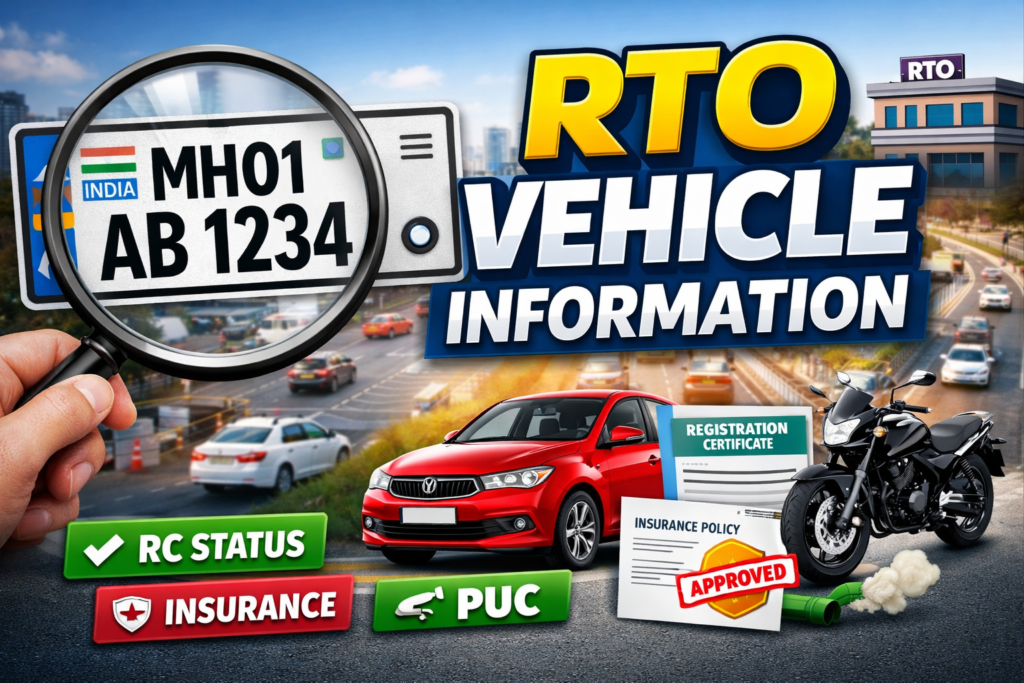
In this article, you will learn what RTO vehicle information includes, how to check it online, and why it matters when you own or buy a vehicle.
What Is RTO Vehicle Information
RTO vehicle information means the official details stored by the RTO about a registered vehicle. This information is kept in a central transport database called VAHAN, which is part of the Parivahan Sewa system managed by the Ministry of Road Transport and Highways.
The RTO database holds details like the vehicle’s registration number, owner’s name, insurance status, and pollution certificate validity. These details help verify that a vehicle is legal and roadworthy.
Overview of Important Vehicle Details
Below is a simple table showing the main details you can check using the vehicle’s registration number.
| Information Type | What It Shows |
|---|---|
| Registration number | Unique number given by the RTO |
| Owner name | Name of the person registered with vehicle |
| Registration date | When the vehicle was first registered |
| Vehicle class | Two-wheeler, car, truck, etc. |
| Fuel type | Petrol, diesel, CNG, electric |
| Insurance status | Current insurance validity |
| PUC status | Pollution certificate validity |
| RTO code | Office that issued the RC |
| Hypothecation | Loan or finance details |
| RC status | Active or expired registration |
These details come from official RTO records accessible through VAHAN or Parivahan Sewa.
What the RTO Does
The RTO is a government office run by each state transport department. It keeps records of vehicles and drivers and makes sure everyone follows the Motor Vehicles Act.
Some of the RTO’s main jobs are:
- Registering new vehicles
- Issuing Registration Certificates (RC)
- Collecting road tax
- Issuing permits for commercial vehicles
- Maintaining records of ownership transfers
This helps keep roads safer and ensures laws are followed.
Why RTO Vehicle Information Matters
RTO vehicle information is important for many reasons:
- Proof of ownership: Shows who legally owns a vehicle.
- Insurance check: Confirms if the vehicle has valid insurance.
- PUC status: Shows if pollution control rules are met.
- Buying or selling: Helps used car or bike buyers confirm details.
- Police checks: Traffic police can verify vehicle details during inspections.
Knowing these details helps you avoid fake or incomplete records and reduces the risk of problems later.
How to Check RTO Vehicle Information Online
Checking vehicle information online is free, and it takes only a few minutes. You can do it in two main ways:
1. Parivahan Sewa Portal
- Go to the official Parivahan Sewa website.
- Click “Know Your Vehicle Details” under Informational Services.
- Enter the vehicle registration number.
- Complete the captcha and submit to see the details.
2. mParivahan Mobile App
You can also use the official mParivahan app on your phone to check vehicle details quickly. The app shows registration, insurance, and PUC information with just the number plate.
No matter which method you choose, the results come directly from the RTO’s official database.
What Details You Will See Online
Once you enter the registration number online, you can view many details about a vehicle:
- Registration date and issuing RTO code
- Vehicle owner’s name (partly hidden for privacy)
- Vehicle class and fuel type
- Insurance validity and expiry date
- PUC (Pollution Under Control) status
- Fitness certificate (especially for commercial vehicles)
- Hypothecation (loan) details
These details help you understand a vehicle’s legal and technical status before buying or renewing documents.
Vehicle Insurance and Pollution (PUC) Status
Two details that matter most for every vehicle owner are insurance and PUC:
- Insurance is required by law for all vehicles. Driving without it can lead to fines.
- PUC Certificate shows that the vehicle meets pollution norms. This certificate usually lasts 6 months before renewal.
Both these details can be checked using the vehicle registration number on the Parivahan portal or mobile app.
Used Vehicle Buyers and RTO Data
If you plan to buy a second-hand vehicle, checking RTO records is very important. You should confirm:
- The owner name matches the seller.
- The vehicle has active insurance.
- The PUC is valid.
- No outstanding road tax or pending challans.
This protects you from buying a vehicle with problems or missing papers.
Common Issues and How to Fix Them
Sometimes, the RTO information might show mistakes like:
- Wrong owner name
- Old address
- Missing insurance or PUC records
If you find errors, you can:
- Visit your local RTO with original documents
- Submit a correction request online through Parivahan Sewa
- Upload necessary papers for proof
Most transport departments now handle corrections online and update records faster.
Tips for Using RTO Information
Here are some simple tips when checking vehicle information:
- Always use the official Parivahan or mParivahan platform.
- Enter the registration number carefully.
- Keep your documents backed up in DigiLocker app.
- Check insurance and PUC status at least once every year.
Good record-keeping can save time and money and avoid legal issues.
Frequently Asked Questions (FAQs)
1. What is RTO vehicle information?
RTO vehicle information is the official data stored by the transport department about a registered vehicle, including owner and registration details.
2. Can I check vehicle details online?
Yes. You can check vehicle details online using the Parivahan Sewa portal or the mParivahan app.
3. Is digital RC valid?
Yes. A digital Registration Certificate (RC) from the official portal or DigiLocker is legally valid.
4. How long does a PUC certificate last?
A PUC certificate usually lasts 6 months and must be renewed on time.
5. What details can I check with a vehicle number?
You can check registration number, owner details, fuel type, insurance status, and PUC validity.