
First I want to tell you that recently some amendments were made to the Motor Vehicles Act in our country. After these amendments traffic rules have become stricter. Because of this having a PUC Certificate also known as Pollution Under Control Certificate has become mandatory. Today if you drive any vehicle, whether it is a two-wheeler, a four-wheeler, or even a larger vehicle, you must have a Pollution Certificate. If you do not have it and you are caught by traffic police, you may have to pay a fine of up to ₹10,000.
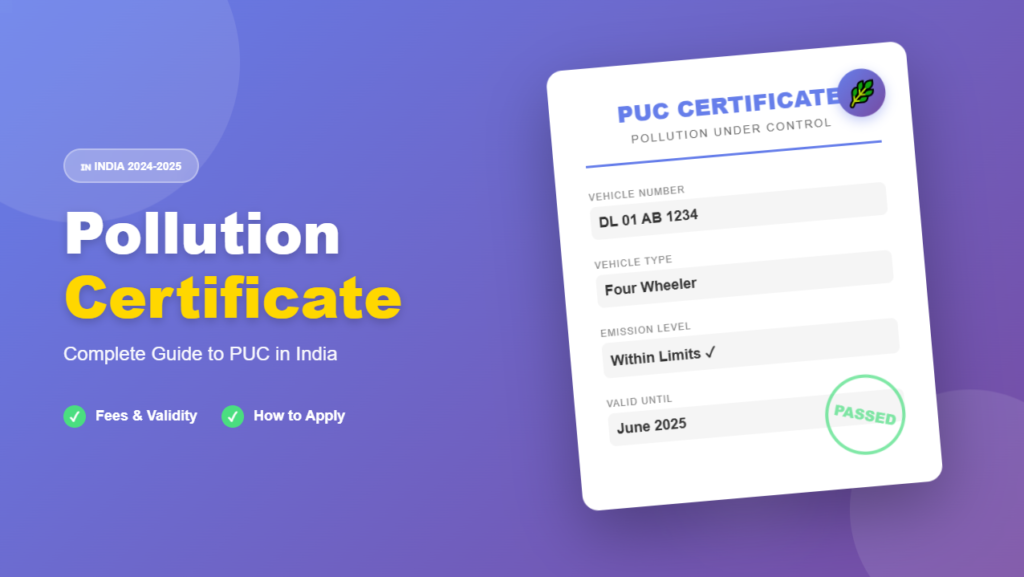
Now let’s talk about what the Pollution Certificate actually is. The Pollution Under Control Certificate checks whether the pollution emitted by your vehicle is within the limits set by the government. Yes, the Government of India has already fixed certain standards for air pollution under the Motor Vehicles Act. Vehicles in the country are allowed to emit pollution only within these set limits. If your vehicle crosses those limits, then you need to take action and get it checked. This certificate helps confirm whether the pollution emitted by your vehicle is within limits or not.
Now, where can you get a Pollution Certificate? Most petrol pumps in almost every state have Pollution Testing Centres. You can go to these centres and get your Pollution Certificate made. These certificates are issued by the State Transport Department.
To get the certificate, you need to carry your RC (Registration Certificate) of the vehicle. Using this, you can easily get your Pollution Certificate issued.
Talking about fees and validity, if you have a normal bike, you can get a Pollution Certificate for one year by paying around ₹50 to ₹100. If you have a car or a truck, the fee may vary depending on the type of vehicle, but generally, it ranges from ₹100 to ₹150. The validity also depends on the vehicle type. If you buy a new vehicle, the agency usually gives you a Pollution Certificate along with the vehicle. This certificate remains valid for 6 months to 1 year, depending on the rules. After that, you need to get a new Pollution Certificate from an authorized centre.
How To Download Your Lost or Damaged Pollution Certificate From Parivahan.gov
If your Pollution Under Control (PUC) Certificate is lost or damaged, you can download it again in just a few minutes using your mobile phone or laptop. This guide walks you through each step so you can get your certificate quickly and without any confusion.
- Start by opening any browser on your mobile or laptop. Make sure your internet connection is active.
- Go to Google and type PUC Certificate in the search box. You will see several results related to PUC services.
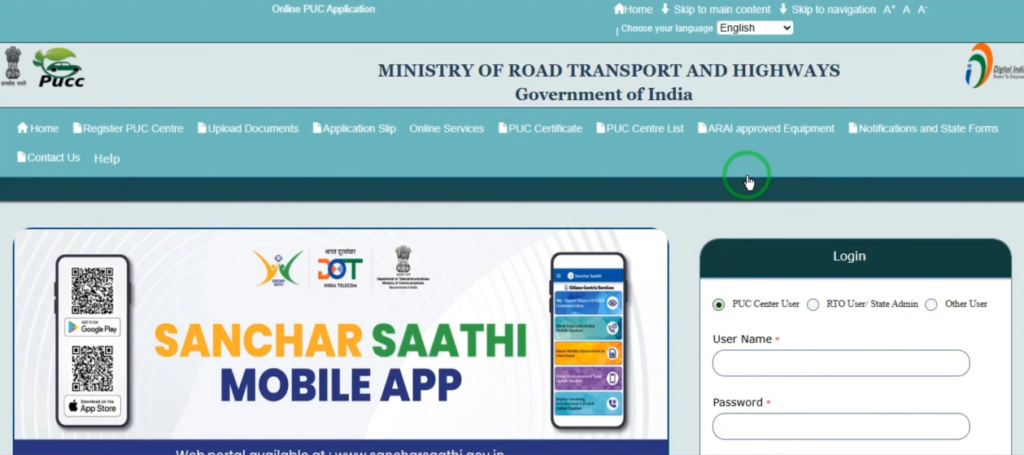
- From the search results, select the first link that shows PUC Certificate Parivahan. Tap or click on it to proceed.
- You will now reach the Parivahan PUC dashboard. The page will show multiple service options. Look for the option labelled PUC Certificate and open it.
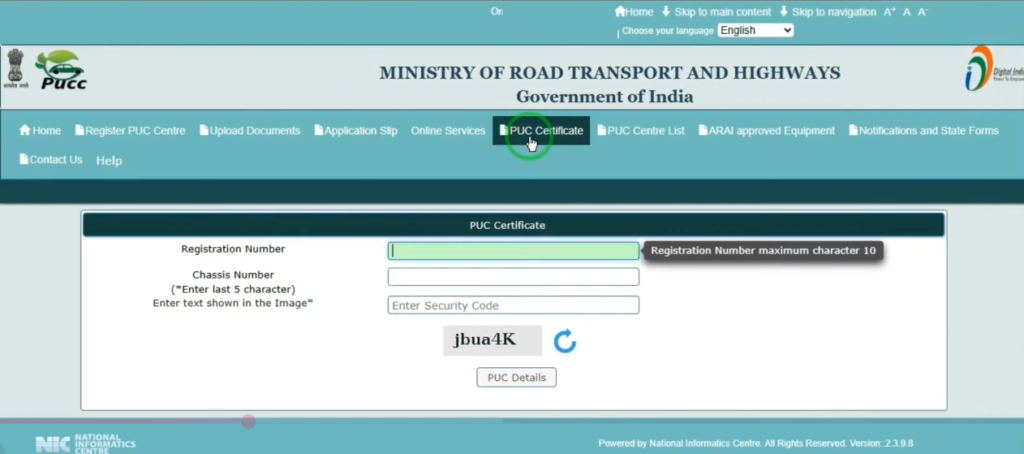
- You will see a field asking for your Registration Number. Type the registration number of your vehicle carefully.
- Next, the page will ask for the last five digits of your chassis number. Enter the digits correctly to continue.
- A captcha will appear on-screen. Type the code in the security field exactly as shown.
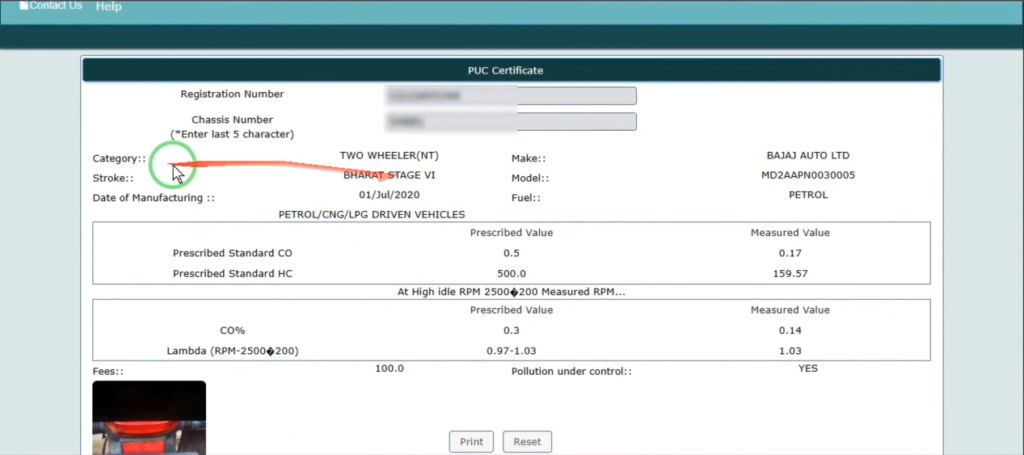
- After entering all required information, click on the PUC Details button. This will show your certificate information.
You will now see the complete details of your vehicle’s PUC Certificate. This includes:
- Vehicle category
- Vehicle information
- Number plate image
- Issue date and time
- Validity date
Everything is visible clearly on this page.
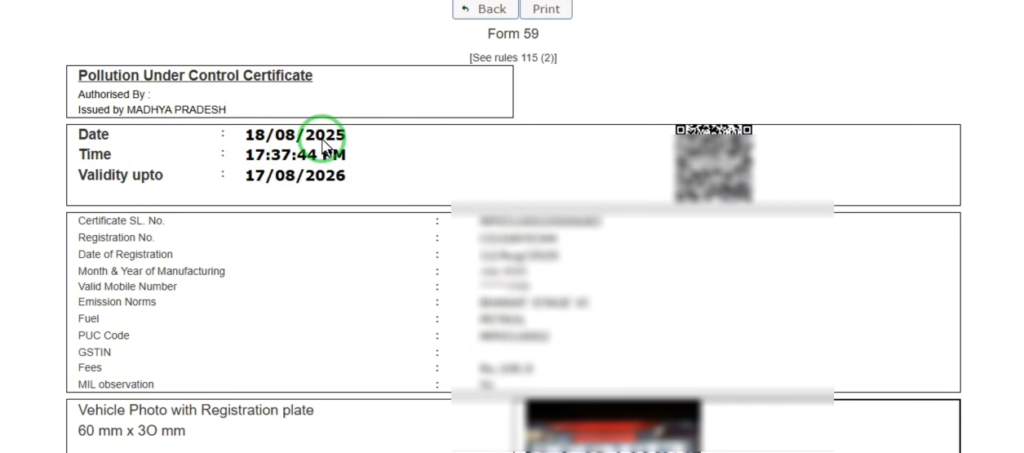
Look for the Print option on the screen. Click on it to open your PUC Certificate.
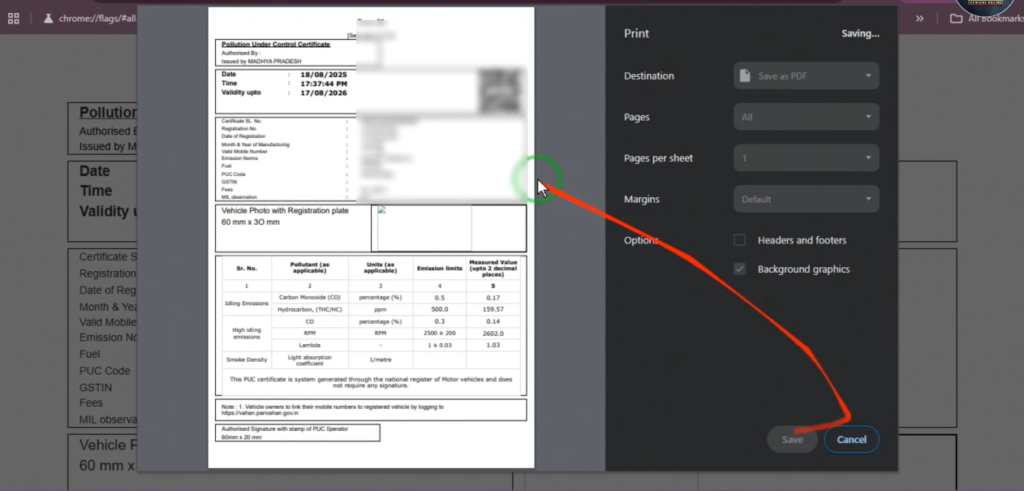
You can now choose to:
- Download the certificate
- Save it as a PDF
- Print it directly
This simple process helps you download or print your PUC Certificate anytime. If you regularly maintain a digital copy, you won’t face problems even if your physical copy gets lost or damaged.
In this way, you can easily download or print your vehicle’s PUC Certificate.

Download Pollution Certificate
click below button to download you Pollution Certificate
What is a A Pollution Certificate
A Pollution Certificate, also known as a PUC Certificate, is a legal document that shows your vehicle is releasing pollution within the safe limit. Every vehicle in India, whether it is a two-wheeler, car, auto, taxi, truck or bus, must carry a valid PUC Certificate. This rule is made under the Motor Vehicles Act of 1988. The purpose is simple: vehicles should not release harmful smoke that harms the air.
When a vehicle is tested, a special machine reads the emission levels. This machine checks gases like Carbon Monoxide (CO), Hydrocarbon (HC), and smoke density. If these values stay below the limit set by the Central Pollution Control Board, your vehicle gets a PUC Certificate.
New vehicles get their first PUC Certificate for 1 year, while most other vehicles are tested every 6 months. The testing process is very quick and usually takes only 30 to 60 seconds. This small test helps keep the environment cleaner and safer for everyone.
Why Pollution Certificate Is Important
The PUC Certificate plays a big role in controlling air pollution. India has more than 35 crore registered vehicles, so monitoring smoke levels has become essential. A valid PUC Certificate ensures that your vehicle does not cross the permissible emission limits. This helps in reducing health risks because polluted air affects the lungs and heart.
Traffic police often check for PUC Certificates during routine checks. Insurance companies also ask for it during renewal. If you do not have this certificate, you may face a fine of ₹1000 for the first offence and ₹2000 for the second offence. In some cities like Delhi, air quality rules are even stricter because pollution levels often cross 300 AQI. Because of this, vehicle emissions are watched closely.
Who Needs a Pollution Certificate
The PUC Certificate is required for all types of vehicles:
- Petrol vehicles
- Diesel vehicles
- Two-wheelers
- Cars and SUVs
- Autos and taxis
- Commercial vehicles like trucks and buses
- CNG and LPG vehicles
Whether your vehicle is BS3, BS4 or BS6, the rule is the same. New BS6 vehicles also need regular testing because the engine must stay within the allowed smoke levels. The first PUC Certificate is valid for 12 months, and after that most vehicles get a certificate valid for 6 months.
Documents Required to Get a Pollution Certificate
To get a PUC Certificate, you do not need many documents. The process is simple. You only need:
- Vehicle registration number
- Last PUC Certificate number (only if you are renewing)
- No ID proof is required
- No engine number or chassis number is required
The cost of getting a PUC Certificate is also very low. In most states:
- Two-wheelers: ₹60 to ₹80
- Petrol cars: ₹80 to ₹120
- Diesel cars: ₹100 to ₹150
- Commercial diesel vehicles: ₹150 to ₹200
These charges may change slightly depending on the state.
How to Apply for Pollution Certificate Online
The government allows users to check and download their PUC Certificate online. However, the actual emission test must still be done at a physical testing centre. Here is how to check or download it:
- Go to the official Parivahan website.
- Open the Pollution Under Control (PUC) section.
- Enter your vehicle number.
- Enter the last PUC Certificate number, if available.
- Fill the captcha code.
- Click on the download button.
The online system stores your certificate data in a central database. You can show the digital copy on your phone during a traffic check.
How to Get a Pollution Certificate at a Testing Centre
Steps to get a PUC certificate (at a testing centre)
- Go to an authorised testing centre
- Use a “PUC / emission-testing centre,” often located at petrol pumps or RTO-approved emission/test centres.
- Some states maintain a full list of approved PUC centres (for example via the official PUC portal).
- Take your vehicle there for an emission test
- At the centre, the operator will connect appropriate testing equipment to your vehicle’s exhaust to measure emissions (CO, HC, NOx, etc.).
- If your vehicle passes (i.e. emissions are within limits set by law), the centre generates the PUC certificate.
- Pay the required fee and get the certificate
- For two-wheelers, typical fee range: ₹ 60–100.
- For four-wheelers (cars) usually: ₹ 80–120 (or around ₹100–150 depending on fuel / vehicle type / state).
- After payment and passing the test, you receive a hard-copy certificate.
- Check validity and keep track of expiry
- For many vehicles, the PUC certificate validity is 6 months after issuance.
- For new vehicles, sometimes initial PUC may be valid for up to 1 year (depending on rules and vehicle type).
- Always ensure you have a valid certificate driving without one may lead to penalties.
- (Optional) Check or download PUC online
- Even though the test must be done physically, many states let you verify or download your PUC certificate online by entering vehicle registration number + last 5 digits of chassis number.
Validity, Charges, and Renewal Rules
The validity depends on the type of vehicle:
- New vehicle: Valid for 12 months
- All other vehicles: Valid for 6 months
- High-emission vehicles may need an early test
Charges differ across states but usually stay between ₹60 to ₹200. The renewal process is the same as getting a new certificate: you simply visit a testing centre and get a fresh test done.
If you ignore renewal, you may face:
- Challan of ₹1000 for 1st time
- Challan of ₹2000 for 2nd time
In some cities, repeated violations may lead to the vehicle being stopped from running until a valid certificate is submitted.
Pollution Certificate Rules, Penalties, and Legal Requirements
The law is very strict because vehicle smoke is a major contributor to air pollution. The Motor Vehicles Act and Supreme Court guidelines make PUC testing mandatory for all registered vehicles.
Some key rules include:
- Every vehicle must carry a valid PUC Certificate at all times.
- The certificate must show emission levels in percentage values.
- The testing centre must be authorized by the government.
- Testing machines are calibrated regularly for accuracy.
Penalty details:
- ₹1000 for first offence
- ₹2000 for repeat offences
- In Delhi NCR, special pollution rules apply because PM2.5 and NOx levels often cross safe values.