
Vehicle border tax is a special tax or fee that some states in India charge when a vehicle from another state enters their territory and is used there for a short period. This is different from the regular road tax you already pay in the state where your vehicle is registered.
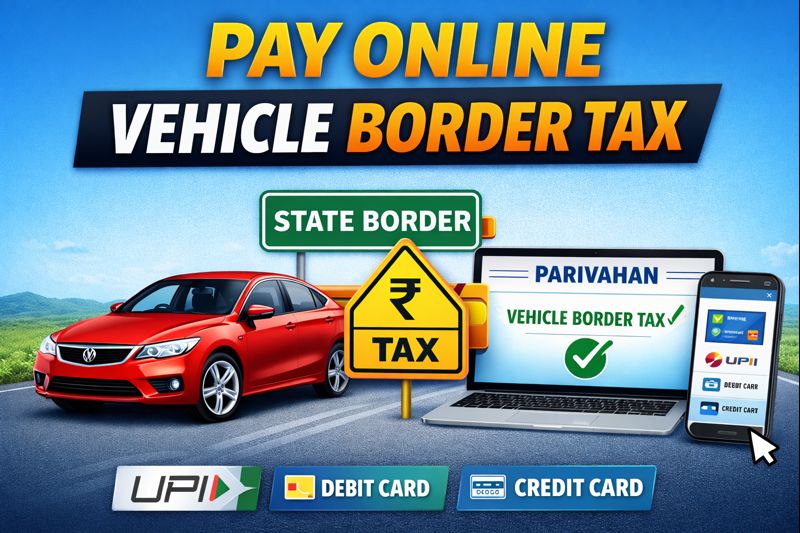
Border tax is specifically for interstate movement when the vehicle stays temporarily in another state and often does not have a permit for long-term use there. Some states ask for this tax so that vehicles from outside contribute to maintenance of local roads and services while they are inside the state.
FASTag for Vehicles in India 2026:How to Apply, Recharge, Benefits and Penalty Rules
Parivahan Quick Actions (Official Links)
Use official government portals and apps for driving licence and vehicle related services.
This is an informational website. All buttons redirect to official government platforms.Why Border Tax Exists
Every state manages its own roads and infrastructure. The road tax you pay in your home state helps that state build and repair its roads. When your vehicle enters another state, that state’s roads are being used too. To balance this, some states charge them a border tax or entry tax.
The money collected is meant to support the local transport department and regional infrastructure. It also ensures fairness so that vehicles registered in one state do not use another state’s roads without contributing to their upkeep.
Historically, state border check posts used to collect these taxes manually at checkpoints. These days, more states offer online payment options through official portals like the Parivahan website or state transport sites for easier tax payment. watch below video carefully every step explained very well visually
Who Has to Pay Border Tax
Not all vehicles have to pay border tax. The basic rule is:
- Commercial vehicles such as goods carriers, buses, taxis, tourist vehicles often need to pay when entering a new state.
- Private cars may also have to pay border tax in some states if they are used for tourism or commercial trips beyond a certain number of days.
- Vehicles with special permits or interstate permits (like All India Tourist Permits) may be exempted from border tax in many states. For vehicles with valid all-India tourist permits, the Ministry of Road Transport and Highways (MoRTH) has told states not to charge this fee on entry.
- Temporary visitors who are just passing through without using local roads for long may also be treated differently by some states.
Check the rules of the state you are entering before travel, because these conditions vary widely.
How Border Tax Is Calculated
Border tax is usually calculated based on time period and vehicle type. Most states have slabs or rates:
- For a commercial goods vehicle, the tax may be charged per day, 7-day block, 30-day block, etc.
- Passenger vehicles like taxis or tourist buses may have a per passenger or per seat tax.
- Some state authorities calculate a percentage of the regular tax according to how long the vehicle will stay.
For example, a truck entering a state might be charged the equivalent of a few days or weeks of road tax depending on where it goes and how long it stays. Rates vary widely and change over time, so always check with the state transport website before you travel.
Where Border Tax Applies in India
Border tax rules are not the same in every Indian state. Some states still actively collect border tax and temporary entry fees for other state vehicles, while others have modified or removed physical check posts and moved to online systems.
Some states charge border tax and additional permit fees for commercial vehicles entering for business or tourism. Others may only collect it if the vehicle is going to operate inside the state for a long period without proper interstate permits.
Rules can also vary depending on what kind of vehicle you are driving (private car, taxi, commercial truck, tourist bus, or transport service). Before planning trips that cross multiple state borders, it’s a good idea to confirm the latest requirements of the states you will go through.
How to Pay Border Tax Online
Most states now let you pay this tax online so you do not need to stop at physical check posts. The general steps are:
- Visit the official state transport website or the Parivahan/VAHAN portal.
- Choose the border tax or entry tax payment option.
- Enter vehicle details like registration number, chassis number, and travel period.
- Select the tax period you are paying for (one day, 7 days, 30 days, etc.).
- Choose a payment method like debit card, credit card, net banking or UPI.
- Complete the payment and download the receipt.
This online payment helps you avoid long queues at checkpoints and also gives you a digital record you can show to officials if needed.
Border Tax at Physical Check Posts
Although many states are removing traditional border check posts, some still operate them. At a check post you may be asked for:
- Vehicle registration number
- Permit details, if any
- Destination and purpose of travel
- Proof of payment of border tax (if you have already paid online)
You might be able to pay this tax on the spot in cash, card or by scanning a QR code that links to the state tax portal. However, online payment ahead of time is usually easier and faster.
Note that check post systems are changing in many places, with new e-permit and automatic number plate recognition systems being introduced.
Border Tax Receipts and Verification
After paying border tax, whether online or at a kiosk, you must keep the receipt or payment confirmation. This receipt proves you have legally paid the tax required by that state. Most states ask drivers to keep a printed or digital copy.
In online systems, the receipt usually contains:
- Vehicle details
- Tax type and period
- Amount paid
- Payment date and reference number
Officials at check posts or during inspections may ask to see this, so save it on your phone or print it before travel.
Penalties for Not Paying Border Tax
If you enter a state and operate the vehicle without paying the required border tax where it is applicable, there can be penalties. These may include:
- Fines or late fees
- Being stopped by transport officials
- A requirement to pay the tax plus penalty on the spot
Since rules vary, some states may take stricter action than others. It is always safer to check and pay the required tax before or when you enter the state.
This is true whether you are driving privately or using a commercial vehicle for business.
Tips and Common Questions About Border Tax
Here are some practical tips and answers to common concerns:
Check state rules first: Each state’s transport department website usually lists border tax rates and conditions. Regulations change often.
Use official portals: Pay online using recognized government sites to avoid scams.
Know your permit status: If your vehicle has an interstate permit or an all-India tourist permit, you may not have to pay border tax in many states.
Keep receipts: Always save your payment receipt in case you need it at a check post or during inspections.
Plan for commercial use: If you operate a taxi, transport business, or haul goods between states regularly, look into interstate permits that may reduce border tax requirements.
Traveling short distances: Some states may not charge border tax if you are just passing through without using local roads for commercial purposes.
Online is easier: Paying in advance online helps you avoid delays, unexpected fines, and long wait times at checkpoints