
FASTag is a system used for paying toll charges on highways in India without stopping your vehicle. It uses a small sticker with Radio Frequency Identification (RFID) technology that you stick on your car’s windshield. When you drive through a toll plaza, sensors read this tag and automatically deduct the toll amount from your linked account. This means you do not need cash at toll booths and can move faster through the toll lane.
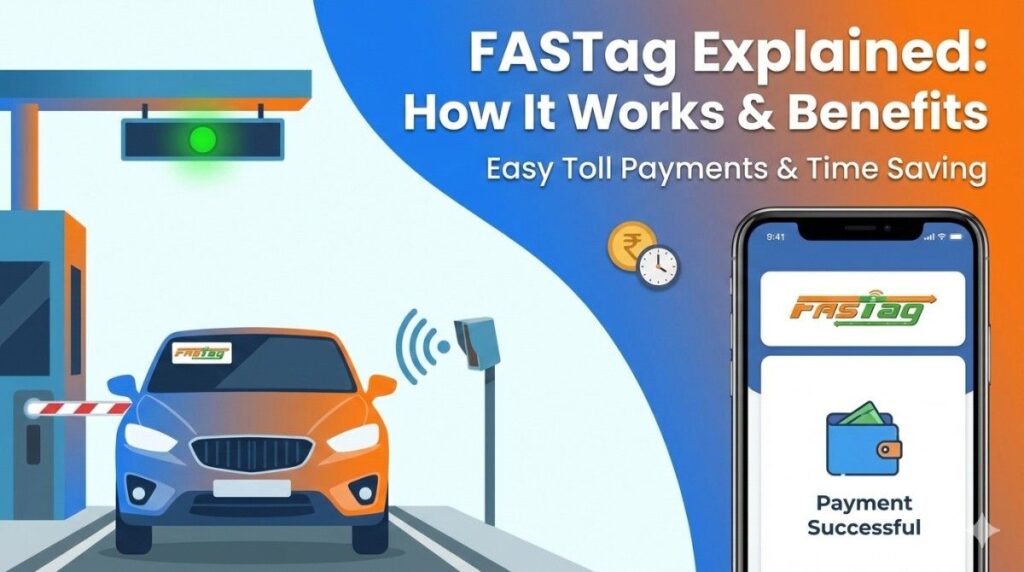
FASTag stands for electronic toll collection implemented under the National Electronic Toll Collection (NETC) program. It works across most Indian national highways and expressways, making toll payments smooth and fast
Vehicle Green Sewa Requirment 2026, Scheme Value
Parivahan Quick Actions (Official Links)
Use official government portals and apps for driving licence and vehicle related services.
This is an informational website. All buttons redirect to official government platforms.History and Background of FASTag
FASTag was introduced by the government of India to reduce waiting times and improve traffic flow at toll plazas. The concept of electronic toll collection started earlier in many countries, but India adopted FASTag widely on its highways in the mid-2010s. Initially, it was tested on major national highway stretches and later rolled out nationwide.
By 2021, the government made FASTag mandatory for all vehicles on toll plazas. This means drivers must have a FASTag to use toll booths without paying extra charges.
How FASTag Works
FASTag uses RFID technology. This is a form of wireless communication between a small tag on your windshield and a reader at the toll plaza. When you approach the plaza, the reader detects your tag and sends the toll charge to the system. The toll fee is then deducted automatically from your FASTag account balance.
Because this process happens in a few seconds, you do not need to stop, take out cash or wait for change. This leads to faster movement and fewer traffic jams at toll booths.
Benefits of Using FASTag
FASTag offers several benefits:
- Faster Toll Passage: You can drive through toll plazas without stopping. This saves time, especially on long trips.
- Cashless Payments: You do not need to carry cash for toll payments. Your account balance will pay automatically.
- Saves Fuel: No waiting in long lines means less engine idle time and lower fuel consumption.
- Easy Recharge: You can recharge your FASTag account online anytime via UPI, banks, or mobile wallets.
- Better Traffic Flow: With more cars moving quickly through toll lanes, overall traffic improves.
These benefits make long-distance travel smoother and more comfortable.
How to Get a FASTag
Getting a FASTag is easy. You can apply through:
- A bank that issues FASTags
- Official FASTag portals or apps
- Some petrol pumps and point-of-sale centres
You will need basic vehicle documents and an ID proof to register. After issuing, the FASTag is linked to your vehicle and account for toll payments.
Many banks also allow online FASTag orders through their mobile apps. Once your FASTag arrives, affix it on the windshield as instructed, usually behind the rear-view mirror.
Account Linking and Recharge
After you get a FASTag, you must link it to a payment method. This can be a prepaid wallet or bank account. You then load money into this linked account, which will be used to pay tolls.
Recharging FASTag balance is simple. You can top up using:
- UPI apps like Google Pay or PhonePe
- Net banking
- Bank mobile apps
- Mobile wallets
- Offline recharge at toll plazas or authorised centres
Once the balance is added, the next toll you cross will be paid from that balance. It’s important to check your balance before long trips to avoid a low-balance situation.
Rules and Penalties
Since February 2021, using FASTag at toll plazas has been mandatory for most vehicles in India. Driving through a FASTag lane without a valid tag or with a non-functional tag can lead to penalties.
Traditionally, vehicles without FASTag had to pay double the toll amount at plazas. This rule encourages compliance and digital toll payments.
Recent updates also allow vehicles without a functioning tag to pay via UPI at 1.25 times the toll charge instead of paying double in cash. This change aims to promote digital transactions even if the FASTag is not working.
Make sure your FASTag has enough balance and is in good condition to avoid penalties. Damaged tags or low balance could trigger higher charges at tolls.
FASTag Annual and Monthly Pass Options
To make travel even more convenient, the government introduced a FASTag Annual Pass in 2026. Under this plan, vehicle owners pay a fixed amount once a year and get unlimited or a set number of toll crossings (for example, 200 tolls) on selected national highways and expressways.
This is useful for regular travellers or commuters who use the highway often. Instead of recharging each time, the annual pass covers most trips and can save money
Different passes may be available, including monthly passes in some regions, which help people travelling frequently save on toll costs.
FASTag and Other Payments
FASTag is not just for tolls anymore in some cases. The system has expanded to include payments like parking fees and other highway-related charges in certain locations.
This means the same tag that pays your toll can also handle other travel payments in the future, helping you keep all charges in one place. It is a step toward a more unified digital payment system for vehicle travel.
Tips for Using FASTag Well
Here are some practical tips to make the most of your FASTag:
- Keep Enough Balance: Before a long trip, top up your FASTag so it does not run low at a toll plaza.
- Check Tag Placement: Ensure the FASTag sticker is placed correctly and clean so the scanner reads it easily.
- Monitor Transactions: Use your bank’s app or portal to check toll charges and how your balance is used.
- Use Pass Options: If you travel often on the same route, consider a monthly or annual pass to save money.
- Update KYC: Some rules require KYC details to be updated to continue using FASTag and recharge your account.