
Buying a new vehicle in India is exciting, but before you can legally drive it on public roads, it must be registered with the Regional Transport Office (RTO). Vehicle registration gives your car or bike a unique registration number and records the vehicle details in the national database managed by the Ministry of Road Transport and Highways through the Parivahan Portal.
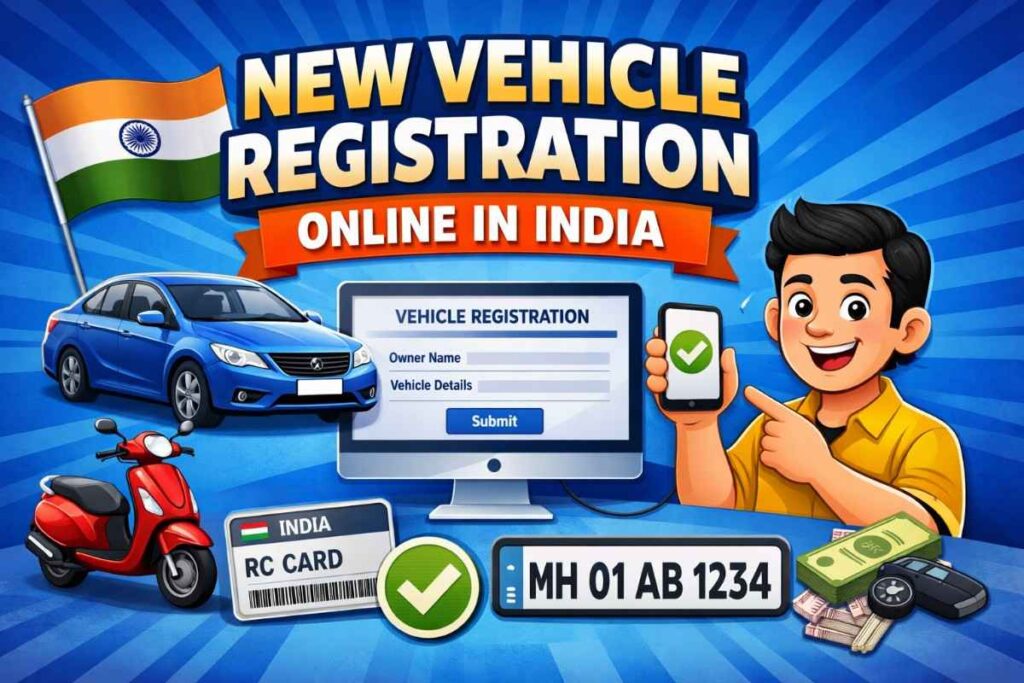
In 2026, the process has become much easier because most of the steps can be completed online through the Parivahan portal. Dealers usually handle registration for buyers, but it is still important to understand the full process, documents, fees, and how to check your registration status.
This guide explains the new vehicle registration process in India, including documents required, fees, rules, and how to check status online.
All India Tourist Permit 2026: Apply, Download, Renewal, Prices & Rules
Overview Table: New Vehicle Registration in India 2026
| Service | Details |
|---|---|
| Authority | Regional Transport Office (RTO) |
| Managed By | Ministry of Road Transport and Highways |
| Portal | Parivahan Portal |
| Registration Type | Temporary and Permanent |
| Validity | Lifetime for private vehicles (usually 15 years) |
| Average Processing Time | 3–7 days |
| Main Forms Used | Form 20, Form 21, Form 22 |
| Fees Range | ₹300 – ₹1500 depending on vehicle |
| RC Format | Smart Card or Digital RC |
| Status Check | Available online through Parivahan |
What is Vehicle Registration in India?
Vehicle registration is the official process of recording a vehicle with the government. Once a vehicle is registered, the owner receives a Registration Certificate (RC) that proves the vehicle is legally allowed to operate on roads.
The registration number (number plate) identifies:
- Vehicle owner details
- Engine and chassis number
- Vehicle model and manufacturer
- Fuel type
- RTO jurisdiction
Without registration, driving a vehicle on public roads is illegal under the Motor Vehicles Act, 1988.
Types of Vehicle Registration
There are two main types of vehicle registration in India.
Temporary Registration
When you purchase a new vehicle, the dealer provides temporary registration which is valid for 30 days. This allows you to use the vehicle while the permanent registration process is completed.
Temporary registration includes:
- Temporary number plate
- Basic vehicle identification
- Validity for one month
Permanent Registration
Permanent registration is issued by the RTO after verifying documents and vehicle details. After approval, the owner receives:
- Permanent registration number
- Smart RC card or digital RC
- Legal permission to drive the vehicle on public roads
Eligibility for Vehicle Registration
To register a vehicle in India, the applicant must meet certain conditions.
Eligibility requirements include:
- Applicant must be 18 years or older
- Must have valid identity proof
- Vehicle must be purchased legally from an authorized dealer
- All taxes and fees must be paid
- Insurance must be valid
Both individuals and companies can register vehicles.
Documents Required for Vehicle Registration
The following documents are usually required when registering a vehicle.
Identity Proof
- Aadhaar card
- PAN card
- Passport
- Voter ID
Address Proof
- Aadhaar card
- Electricity bill
- Passport
- Rent agreement
Vehicle Documents
- Sale certificate (Form 21)
- Roadworthiness certificate (Form 22)
- Insurance certificate
- Temporary registration certificate
Additional Documents
- PAN card copy
- Passport size photographs
- Road tax payment receipt
Make sure all documents are correct because incorrect information may delay the registration process.
Step-by-Step Process to Register a New Vehicle Online
The vehicle registration process can be completed online through the Parivahan portal.
Step 1: Visit the Portal
Open the official Parivahan website.
Step 2: Select Vehicle Registration Services
Choose your state and RTO from the menu.
Step 3: Fill Application Form
Complete Form 20, which is the main application for vehicle registration.
Step 4: Upload Documents
Upload required documents such as insurance, identity proof, and sale certificate.
Step 5: Pay Fees and Taxes
Pay registration charges and road tax online.
Step 6: Vehicle Inspection
The RTO may inspect the vehicle if required.
Step 7: Receive Registration Number
After approval, the vehicle receives a permanent registration number.
Step 8: Download RC
The RC can be downloaded digitally or received as a smart card
Vehicle Registration Fees in India
Vehicle registration fees vary depending on vehicle type.
Approximate fees in 2026 are:
| Vehicle Type | Registration Fee |
|---|---|
| Motorcycle | ₹300 |
| Imported Motorcycle | ₹2500 |
| Car / Light Motor Vehicle | ₹600 |
| Imported Car | ₹5000 |
| Commercial Vehicle | ₹1000 |
Additional charges may include:
- Smart card fee: ₹200
- Number plate charges
- State road tax
Fees may differ slightly between states.
Road Tax and Insurance Requirements
Before registering a vehicle, the owner must pay road tax and obtain insurance.
Road Tax
Road tax is a mandatory state tax paid when registering a vehicle. It varies depending on:
- Vehicle cost
- Fuel type
- State regulations
For private vehicles, road tax is usually paid once for 15 years.
Insurance
Vehicle insurance is compulsory under Indian law. At least third-party insurance is required before registration.
Without insurance, the RTO will not approve the registration application.
How to Check Vehicle Registration Status Online
You can check your vehicle registration status online.
Follow these steps:
- Visit the Parivahan portal
- Select Vehicle Registration Status
- Enter application number or vehicle number
- Click Submit
The portal will show details such as:
- Registration status
- Application progress
- RTO approval stage
- RC dispatch status
This helps vehicle owners track their registration easily.
Vehicle Registration Validity and Renewal
For private vehicles, registration validity is usually 15 years.
After 15 years, owners must apply for registration renewal.
Renewal requires:
- Vehicle inspection
- Fitness certificate
- Payment of renewal fees
Commercial vehicles usually require renewal every 5 years.
Driving with an expired registration certificate may lead to fines or penalties.
Important Rules for Vehicle Owners
Vehicle owners must follow certain rules after registration.
Important guidelines include:
- Always display the correct number plate
- Carry RC while driving
- Keep vehicle insurance valid
- Maintain pollution certificate (PUC)
- Update address if you move to another state
Following these rules ensures that your vehicle remains legally compliant.
Frequently Asked Questions (FAQs)
1. How long does vehicle registration take in India?
Vehicle registration usually takes 3 to 7 working days after submitting documents and completing payment.
2. Can I drive my new vehicle without registration?
You can drive with temporary registration, which is valid for 30 days, but permanent registration must be completed before it expires.
3. Is vehicle registration mandatory in India?
Yes. According to the Motor Vehicles Act, every vehicle must be registered before it can be used on public roads.
4. Can I download my RC online?
Yes. Vehicle owners can download the digital RC from the Parivahan portal or the mParivahan mobile app.
5. What happens if my vehicle is not registered?
Driving an unregistered vehicle may result in heavy fines and penalties under traffic laws.
6. Is dealer registration valid?
Most dealers complete the registration process on behalf of the buyer. However, the vehicle owner can also apply directly through the Parivahan portal.
7. Can I change my RTO after registration?
Yes. If you move to another state, you must apply for vehicle re-registration and obtain a No Objection Certificate (NOC).