
Parivahan Sewa is the official online portal of the Ministry of Road Transport and Highways in India. It brings many transport services into one place so you do not have to visit the Regional Transport Office (RTO) in person. You can use this portal to apply for driving licences, vehicle registration, pay taxes, check challans, and apply for permits. Dowloading your documents or tracking applications is also possible online.
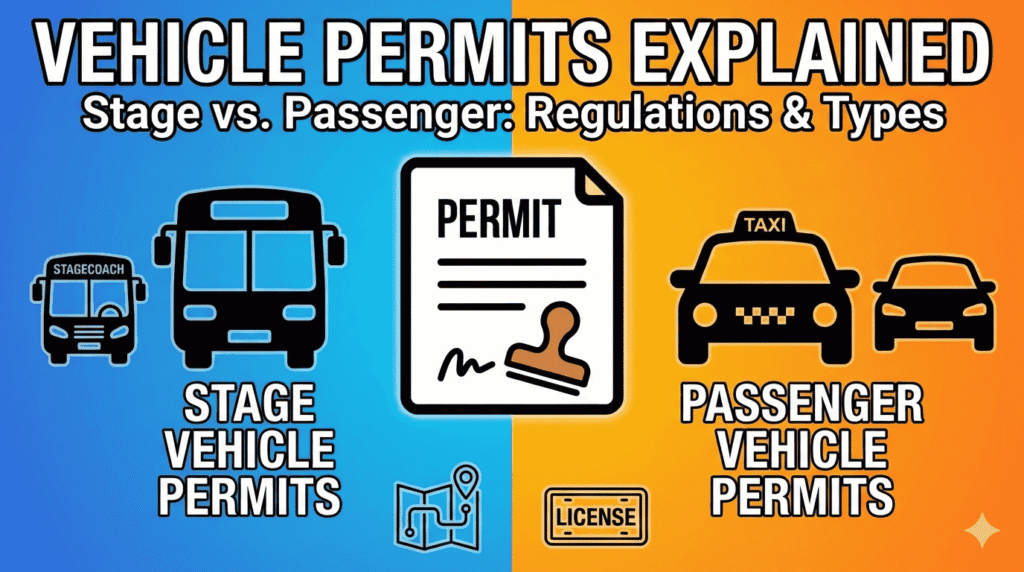
A permit is a legal certificate that allows a commercial vehicle to operate on public roads. Without a valid permit, using a vehicle for commercial passenger transport is against the law. Stage and passenger permits specifically allow vehicles to carry people for hire. These permits are issued under the Motor Vehicles Act, 1988, which sets rules and conditions for all transport vehicles in India.
Parivahan Sewa connects to Vahan (vehicle data system) and lets you complete permit applications online. The system is designed to reduce paperwork, save time, and make the process transparent. Once your application is approved, you can download the permit as a PDF and use it legally.
Parivahan Quick Actions (Official Links)
Use official government portals and apps for driving licence and vehicle related services.
This is an informational website. All buttons redirect to official government platforms.Your Sarathi Account Is Locked? Causes, Fixes, and Recovery Steps
Why You Need Stage and Passenger Vehicle Permits
In India, any vehicle that carries people for business, transport services, or hire must have a valid permit. This includes public buses, school vans, tourist vehicles, taxis, and contract buses used by companies or organisations. If you drive such a vehicle without a permit, it is illegal.
Vehicle Permits ensure that vehicles meet safety, tax, and environmental rules. They also allow transport authorities to manage routes, stops, and traffic. Stage carriage and passenger permits are two common types for carrying passengers. Stage carriage permits are for vehicles that run on regular routes with fixed stops and schedules. Passenger permits include vehicles that carry people on contracts, for tourism, or specific transport needs.
The Motor Vehicles Act says that any vehicle used for carrying passengers must have the right permit. It allows state authorities to grant, refuse, renew, or cancel permits based on safety and route conditions. Getting the right permit also protects the vehicle owner from legal fines or penalties during checks.
Types of Vehicle Permits for Passenger Transport
There are several main Vehicle Permits types for passenger vehicles in India. Each type serves different transport needs:
Stage Carriage Permit This is for buses and vans that carry passengers on regular routes with fixed stops. These vehicles operate like city buses or regional transport buses on scheduled routes.
Contract Carriage Permit This permit is for vehicles that carry passengers on a contract basis. Common examples are school buses, employee shuttles, and vehicles that serve institutions on agreements.
Tourist Permit Vehicles carrying tourists for intercity or interstate travel need this permit. This includes tourist buses and cars used for tourism services.
Private Service Vehicle Permit These are for vehicles used by companies to transport their employees only and not public passengers.
Temporary or Special Permits These are short-term permits for special events, single journeys, or temporary needs, often valid for a limited period like weeks or months.
Who Must Apply for Stage and Passenger Vehicle Permits
Anyone who owns or operates a vehicle that carries passengers for hire or reward must apply for the correct permit. If you operate a bus, taxi, school van, or tourist vehicle and collect fare for the service, you must have a valid permit.
Stage carriage Vehicle Permits are specifically for vehicles that run on regular fixed routes with scheduled stops. These are usually public transport buses that serve the same routes every day.
Passenger permits cover a wider range of vehicles that may not follow fixed tours but still carry passengers for payment. Contract carriages carry groups under specific agreements, such as employee transport or school trips.
Tourist vehicles that carry passengers on trips between cities or across states also need a permit to operate legally. Private service vehicle owners must apply for a permit if they use the vehicle to transport staff or members of an organization.
Required Documents for Vehicle Permits Application
When you apply for a permit on Parivahan Sewa, you will need to upload a set of documents. These documents prove that your vehicle and business meet legal and safety requirements. Commonly required documents include your Registration Certificate (RC), which confirms your ownership and vehicle details. You will also need a valid insurance certificate showing that your vehicle is covered, along with a Pollution Under Control (PUC) certificate.
For commercial vehicles, a fitness certificate is often required. Fitness certificates show that the vehicle is safe for carrying passengers and meets government standards. You will have to show proof of road tax payment and may need identity and address proofs for the vehicle owner.
The exact list of documents varies by permit type and by state. For example, stage carriage permits may require additional route details or schedules. Contract permits typically require a copy of the contract agreement explaining your services. Special permits sometimes need evidence of special events or temporary permission reasons.
How to Apply for Stage and Passenger Vehicle Permits Online
Applying for a permit online through Parivahan Sewa saves time and avoids multiple trips to the RTO. The first step is to visit the official portal and choose the Permit Services section. You will need to select your state and the RTO office that will process your application.
Once there, choose the type of permit you want, such as stage carriage or passenger permit. The online form will ask for details about the vehicle, owner, routes, passenger capacity, and service type. You will then upload all required documents, including RC, insurance, PUC, and fitness certificates.
After verifying your details, you must pay the permit fees online using net banking, debit/credit cards, or UPI. The system will generate a reference number you can use to track your application status on the portal.
Once approved by the transport authority, you can download the digital permit from the portal. If any issue arises, the portal usually shows messages or feedback so you can correct information and re-submit.
How to Apply Offline Vehicle Permits
Although the online system is recommended, you can still apply offline at your local RTO. Visit the office and ask for the correct application form for your permit type. For example, Form SCPA is used to apply for stage carriage permits.
Fill the form carefully with correct details about the vehicle, owner, planned routes, and service. Attach all required documents like RC, insurance, fitness certificate, and address proof. Submit the hard copies to the counter along with relevant fees.
The RTO will review your application, check documents, and may ask you to appear in person for final checks or interviews. Once everything is complete and verified, the permit will be issued. In some cases, you may have to return after a few days to pick up the approved permit.
Fees and Validity of Permits
Permit fees in India vary depending on the permit type and the rules set by the transport authority. For most stage carriage and contract carriage permits, a standard fee is set around ₹1,100 for a five year period for buses. Tourist permits are often lower with a different validity period.
Temporary and special permits have their own fee structures, usually based on duration and route. You must pay the correct fee at the time of application. These fees are different in each state and may be changed by the state transport authority.
Validity refers to how long the permit is legally acceptable. Many stage carriage permits are valid for up to five years. Tourist permits may be valid for shorter periods such as one year. Temporary permits might only be valid for weeks or months.
Once a permit expires, you must renew it before the date to avoid penalties. Delayed renewal applications can lead to fines or cancellation of the permit. Most of these renewals can also be done through Parivahan Sewa online.
Permit Renewal, Transfer, and Extensions
After you receive a permit, it is your responsibility to keep it valid. Before the permit expiry date, you must apply for renewal. Online renewal is usually done through the Parivahan Sewa portal by selecting the renewal option and providing current documents and updated information.
If the ownership of the vehicle changes, you need a permit transfer. This means the permit document is legally moved to the new owner. The portal has options for transferring permits, and you need to provide proof of ownership change.
If you change routes, seating capacity, or service conditions, you may need a variation or extension of your existing permit. These requests must be approved before you make changes to your operations.
In case the original permit document is lost, you can apply online for a duplicate permit and download it once approved. This keeps the vehicle legal during checks and inspections.
Rules, Laws, and Important Conditions
All permit rules come from the Motor Vehicles Act, 1988 and related state rules. The Act requires that any vehicle used for carrying passengers commercially have the correct permit. This includes stage carriages, contract carriages, and other passenger services.
Stage carriage rules define how vehicles should operate on fixed routes with scheduled stops. Contract carriages and tourist permits have their own legal conditions about where and how they can operate.
Transport authorities can refuse to grant, renew, or transfer permits if vehicles do not meet safety, document, or fee requirements. Non-compliance can lead to fines or permit cancellation. The portal provides official updates and notifications on changes in rules so operators can stay aware.
Some legal cases have also clarified how permits work across states, especially when routes overlap state boundaries. This shows how important it is to follow the correct legal steps when applying and using permits.